
Colbot · Freetown
The Floods Keep Pulling Me Back Under
Tales of Poverty and Entrapment
Amina, a fishmonger and single mother of three, speaks quietly about the course of her life, and how she has ended up in a community she feels she cannot escape, trapped by recurring floods and social, environmental, and economic forces that are far bigger than her. She sits on a small wooden bench outside her house, fanning smoke from the fire she uses to dry fish in a metal drum fitted with an iron mesh lid. To provide for her three children, she sells her catch within the neighbourhood and carries it along the bustling streets of Freetown.
Colbot is a low-lying coastal settlement in the eastern part of Freetown, home to approximately 12,000 residents just 3.5 kilometers from the city center. It is a place defined by low-income earners, where many — like Amina — rely on precarious livelihoods such as scavenging, petty trading, and stone mining. These residents face constant vulnerability due to deep-seated poverty and limited access to basic services like clean water, sanitation, and healthcare. Inadequate infrastructure, including failing drainage systems and fragile housing construction, is tied to broader land and housing inequities in Freetown, which combine to increase the constant risk of floods and building collapses. While some residents have a desperate sense of urgency to leave and find safety from these hazards, many feel entrapped by the weight of extreme poverty and a lack of agency to secure safer housing. This is the situation that Amina finds herself in.
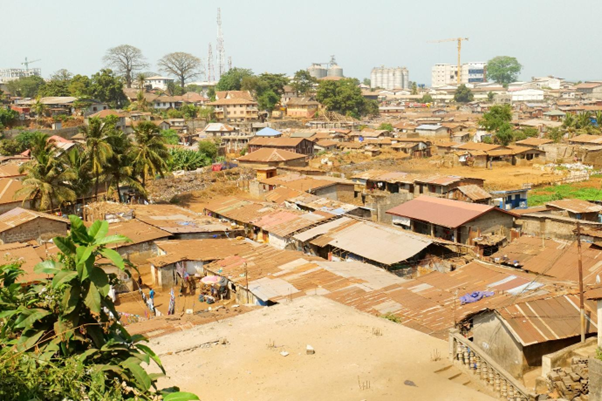
Colbot community · Photo: Ishmail Conteh
The Journey into Colbot
Amina's path to Colbot reflects the constant struggle of navigating informal settlements to find a place to call home, to be safe and secure. She was born in the established neighbourhood of Hagan Street and later moved further east to St. Helena to settle with her first husband. Sadly, after several years of marriage, a divorce left her desperate — being the sole caregiver for two young children. She eventually sought stability in a second marriage in the hillside community of Moyiba, but this marriage also collapsed, leaving her distraught and now responsible for three children.
With no support system to lean on, Amina eventually relocated to Colbot. Her current home is a rented mud-brick house with cracked cement plastering and a rusted, corrugated iron roof. During the heavy rains and storms that batter the coast, the roof is heavily burdened with stones to prevent the iron sheets from flying away.
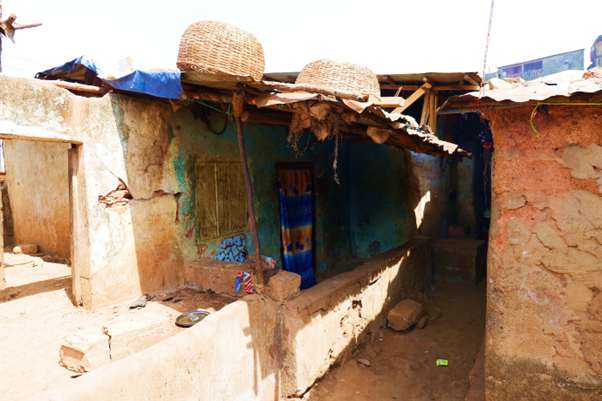
Amina's home · Photo: Ishmail Conteh
From Relocation to Entrapment
The physical environment of the Colbot community feels like a trap, accumulating health and environmental hazards that leave residents with nowhere to turn. The settlement is a narrow stretch of land caught between two relentless stressors. First is the proximity to the seafront, where intermittent high tides push water inward — flooding homes, particularly during the heavy rains. Second is the presence of one of Freetown's largest landfills, known locally as "Bomeh." Bomeh receives tons of solid waste daily from across the city. As these piles of rubble grow, they frequently tumble down and block nearby drainage channels, causing entire neighbourhoods to submerge. The result is constant infrastructure damage and the displacement of families. Stagnant water left behind by these floods increases the risk of vector-borne diseases like malaria and typhoid, alongside waterborne illnesses such as diarrhoea and cholera.
For Amina, the lack of money means seeking piecemeal medical solutions. "Sometimes we develop a cold and go to the hospital if we have money," she explains. "When we don't, we buy drugs from peddlers just to feel better." Furthermore, the constant burning of waste at the dumpsite emits thick, toxic smoke, exposing residents to respiratory issues, persistent coughs, and asthma.
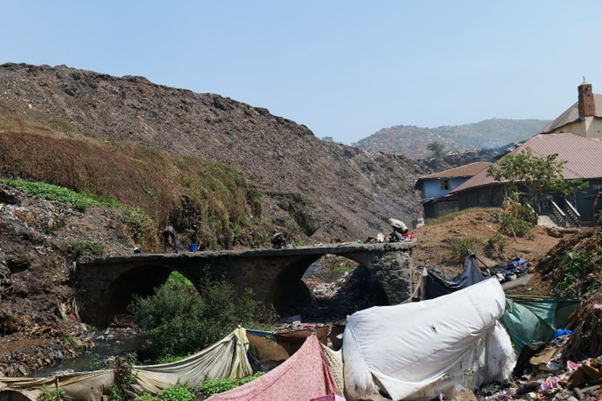
Piles of Waste at Bomeh Dumpsite · Photo: Ishmail Conteh
The Debt Trap: When the Floods Take Everything
The lack of opportunity, coupled with the constant threat to housing, pushes residents like Amina to their limit. She earns a meagre income hawking fish through her neighbourhood and across the city. Because the bulk of her earnings is consumed by rent and food, she is left with no chance to save for a home outside the reach of the tide. Living between the Bomeh dumpsite and the sea, her livelihood is always one storm away from collapse. High tides don't just dampen her floors; they destroy her stock:
The last time it flooded, it destroyed my property, my business, and I lost all my money. It happened while we were sleeping. My neighbour woke us up, and before we realised it, the water was inside. Our clothes and the children's school uniforms were all soaked. I had dried the fish and brought them inside for safety — but the water destroyed them anyway.
The financial pressure is made worse by the fact that Amina operates on credit. She must repay her supplier regardless of what the weather does or face the threat of police arrest.
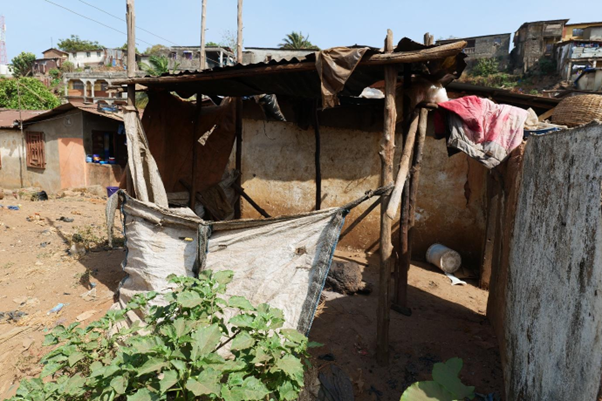
A place where Amina dries fish · Photo: Ishmail Conteh
Competing Priorities: Temporary Solutions
Despite a mountain of competing needs — supporting her children, seeking medical care, and keeping her business afloat, Amina dreams of improving her home's defences. She wants to elevate her veranda and clear the drainage to stop the tide from rushing in. However, her meagre earnings from selling fish are barely enough for food, school fees, and rent. Without the capital for permanent upgrades, Amina is forced into a cycle of short-term coping. When the floods come, she scoops out the water and scrubs the mud away. These small, exhausting actions allow her to survive the moment, but they cannot break the cycle that keeps her trapped.
This lack of resources also forced her to decline a neighbour's proposal to contribute toward fixing a nearby drain clogged with Bomeh's waste. "I told them I don't have the money right now," she explains. "I am hustling just to feed my children and pay the rent."
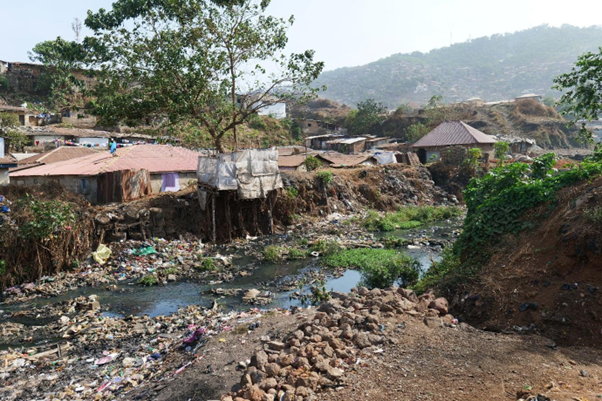
A drainage clogged with waste · Photo: Ishmail Conteh
Distribute Amina's daily earnings across what she needs. You have 10 units left.
Long-Term Solution: Moving Out of Colbot
Amid these relentless challenges, Amina's dream is simple: to leave Colbot for a place where life is more comfortable. She imagines a home where floodwater doesn't seep through the floor, and a place where she can run her fish business without debt, and where her children can finish school without daily worry.
Yet, leaving is nearly impossible. The floods, the debts they trigger, and the daily struggle to provide make it nearly impossible to save enough to start over:
Without the capital to relocate or the resources to improve the drainage, she remains trapped. For now, she stays in Colbot — caught between the rising sea, the encroaching dumpsite, and the heavy responsibility of raising three children alone. She pauses, looking out at the water, before adding a final, haunting thought:
"The floods keep pulling me back under."