
Kumbalangi Nights Recast
The Lives of Assamese Migrant Fisherfolk in Kochi and the Living Heritage of Its Iconic Chinese Nets
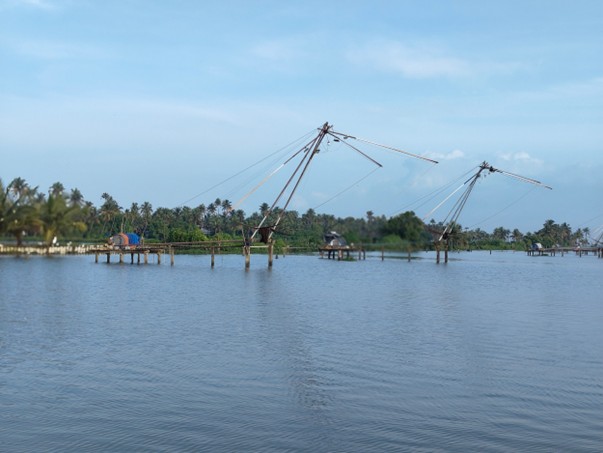
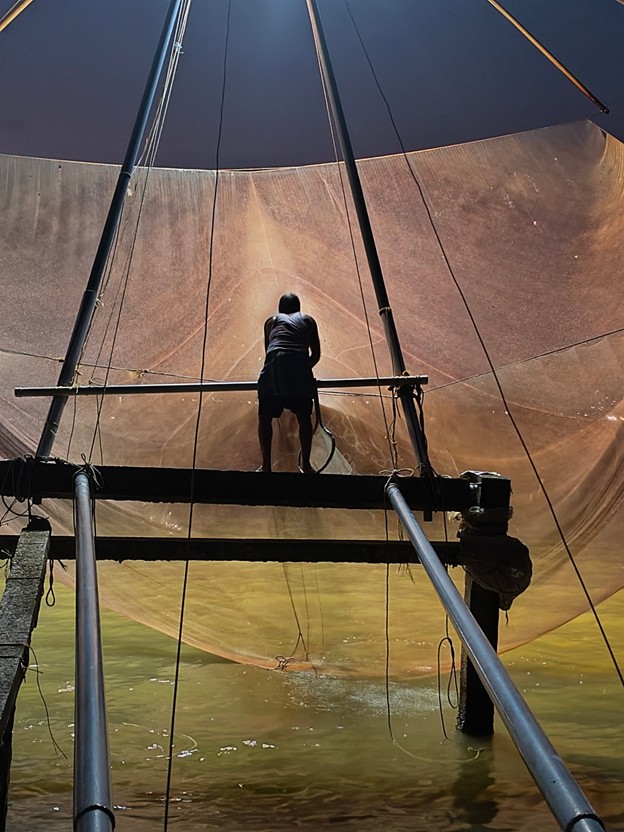
The Chinese fishnet, also known as the Cheenavala or locally as the Kambavala, is a stationary, shore-operated lifting net commonly found in the backwaters and estuaries of Kochi. Historical accounts indicate that these nets were introduced to the Malabar Coast by Chinese traders, most likely during the court of the Zamorin in the fourteenth or fifteenth century. Some sources, however, suggest that their widespread use began during Portuguese interactions in the sixteenth century.
Although the overall structure of the Cheenavala has remained consistent, the materials used in its construction have shifted from punna and teak wood, coir, and coconut timber to steel frames and concrete beams. This change reflects adaptation to resource constraints and the demand for durability, while also marking a departure from traditional craftsmanship.
In recent years, significant changes have occurred in labour dynamics. Local fisherfolk are increasingly withdrawing from direct operations and instead leasing their nets to migrant labourers, particularly from Assam and West Bengal. There are multiple narratives explaining the declining interest of local people in operating Cheenavala, the most important of which include the lack of interest among younger generations, the physical demands that older people can no longer meet, and the scarcity of fish caused by the impacts of climate change, increasing pollution, and alluvial deposits. Leasing nets has become a common practice, allowing net owners to secure income while reducing their physical involvement in the routine.
The following images from Kumbalangi document the shift in labour dynamics in Cheenavala operations, with particular attention to the role of Assamese migrant fisherfolk whose work now sustains and reshapes this enduring practice.
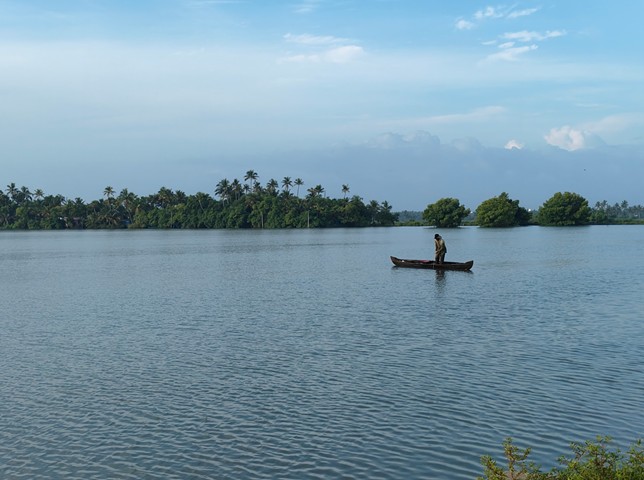
Kumbalangi is a True Island
Kumbalangi is a true island, nestled within the shimmering waters of Vembanad Lake. Life here flows with the rhythms of inland fishing and the age-old practice of Pokkali rice farming, which remains the heart of the community's livelihood. The lake teems with a vibrant array of fish—Chemmeen (Prawn), Karimeen (Pearl Spot/Etroplus suratensis), Madavai (Mullet), Muzhi (Catfish), Kariyil (Tilapia), and Kakka (Clam)—offering a daily bounty. Vembanad Lake is not just a backdrop, but a lifeline, providing steady work and sustenance throughout the year.
The primary fishing season for Cheenavala in Vembanad Lake aligns with year-round operation. Still, the months of October to March are especially productive due to favourable tidal and fish migration patterns. These nets primarily catch fish, such as Pearl Spot (Karimeen), and prawns. Cheenavala is operated mainly at night and is situated across the lake, including Kumbalangi.
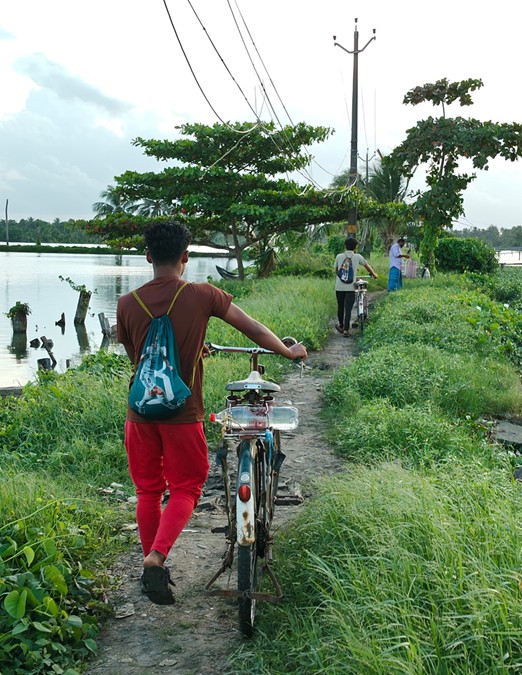
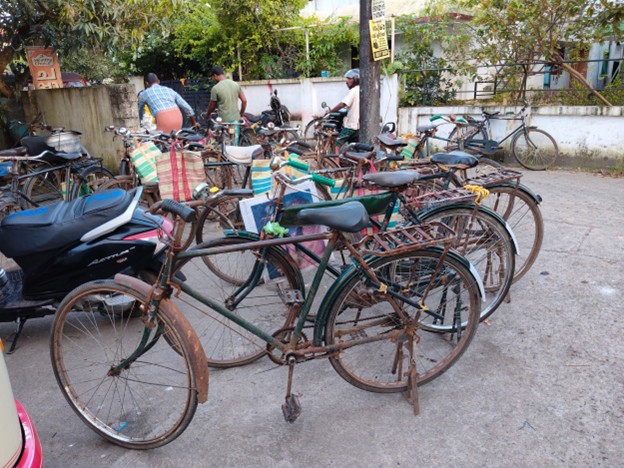
In the evening, around 6 o'clock, migrant fisherfolk, mostly from Assam, cycle through the roads of Kumbalangi, heading to the shores of Vembanad Lake to operate Cheenavala at night. They are the silent souls of Kumbalangi nights, quietly shaping its story without ever speaking a word.
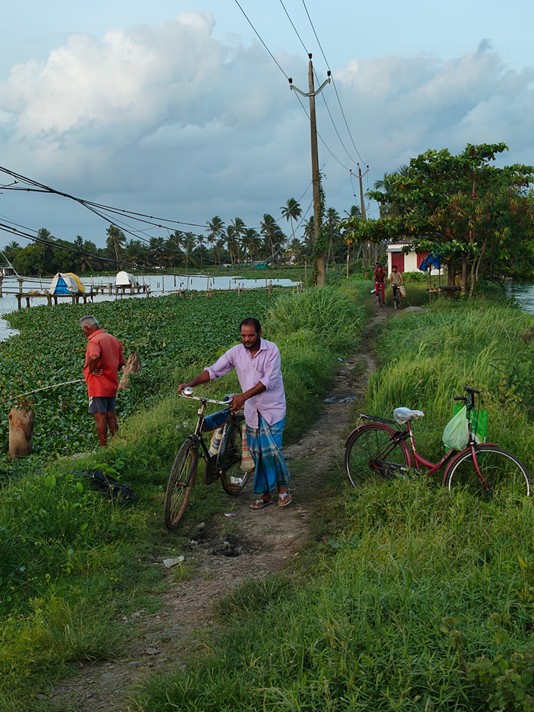
Kajaludheen, a 59-year-old man from Barpeta village of Nagaon district of Assam, is one of the senior immigrant fishermen in Kumbalangi. He has been operating Cheenavala at night in Kumbalangi for the past nine years, arriving by 6.20 pm. Kajaludheen was a farmer in his village, who cultivated vegetables and rice alongside his brothers. He experienced crop damage to his vegetable fields due to frequent flooding of the Brahmaputra River, although the rice fields were relatively safer. However, what attracted him to Kerala was not the distress in his fields but the opportunity to earn double the wages compared to what he earned back home. It was his relative who came to Kumbalangi first, and he invited him. He did not have previous experience with Cheenavala, but he had seen and used a somewhat similar fishing method called "Dheki Jaal," which is prominent in Assam.
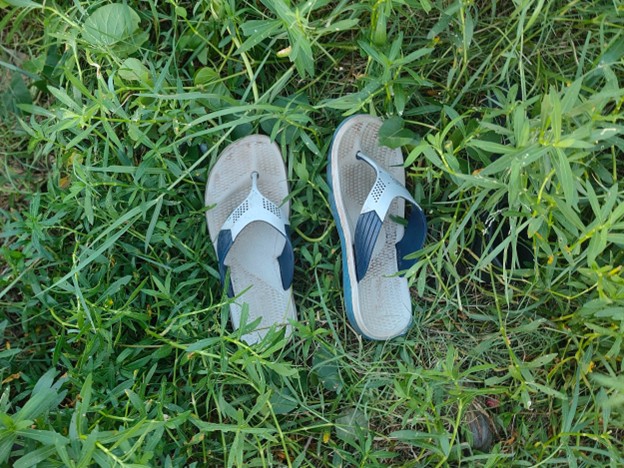
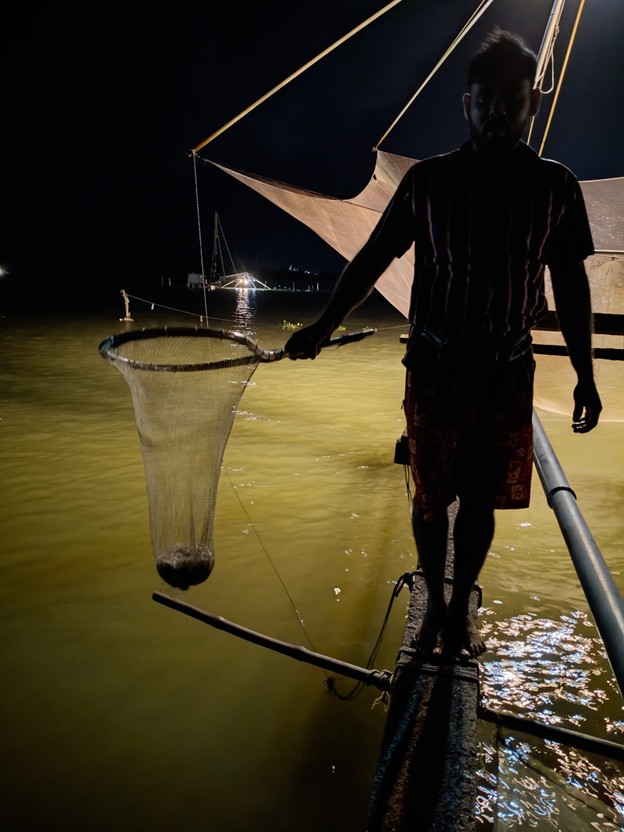
He parked his bicycle by the shore, took off his sandals, and walked across the narrow bamboo and iron bridge. About twenty minutes before he started using the fishing net, he unpacked the items he had brought from home and placed them inside the small hut next to the Chinese net. He turned on the lights, hung his empty bag on the bamboo pole, took off his shirt, and went into the small hut. There, he opened a flask and enjoyed a hot cup of masala tea with a beedi. He also lit a mosquito coil to keep the insects away.
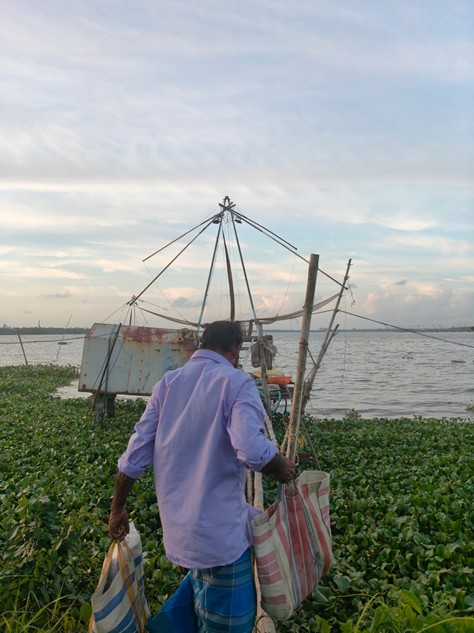
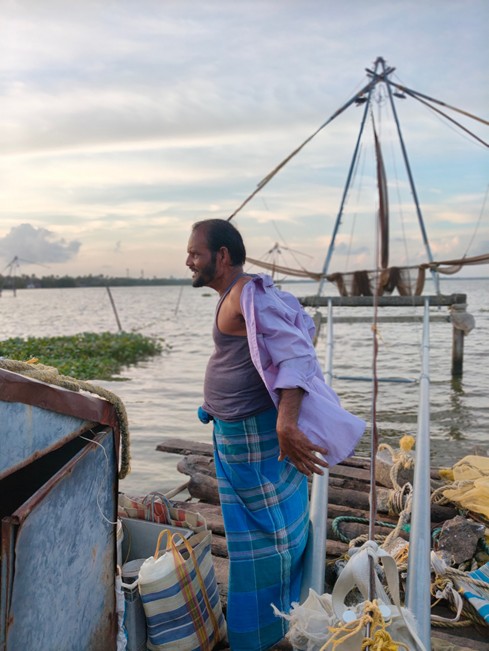
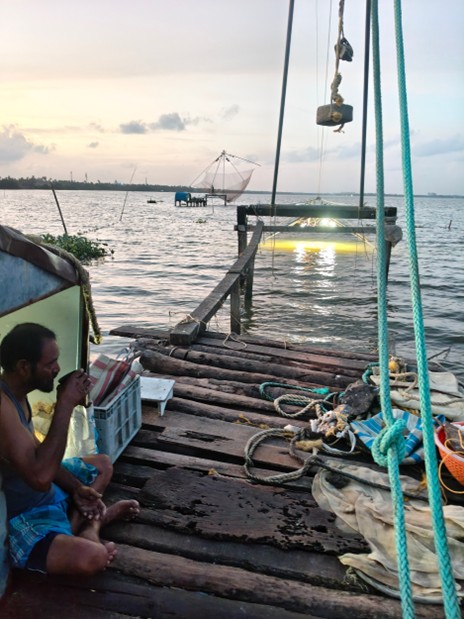
The First Cast
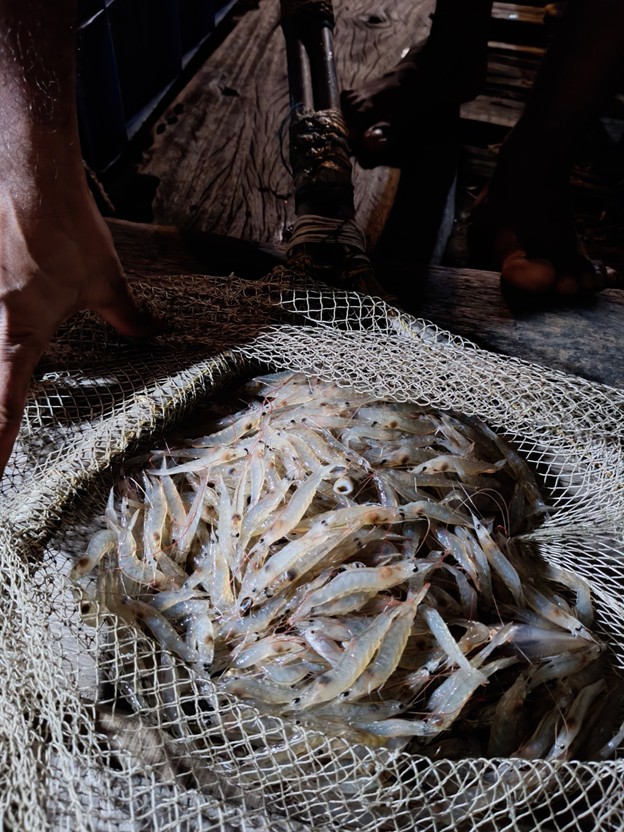
Around 6:45, he started his work by putting the fishing net in the water to catch fish for the first time. After ten minutes, he pulled up the net and found some fresh prawns. He put them in another small net, tied one end to a pole, and let the bottom hang in the lake to keep the fish alive until morning.
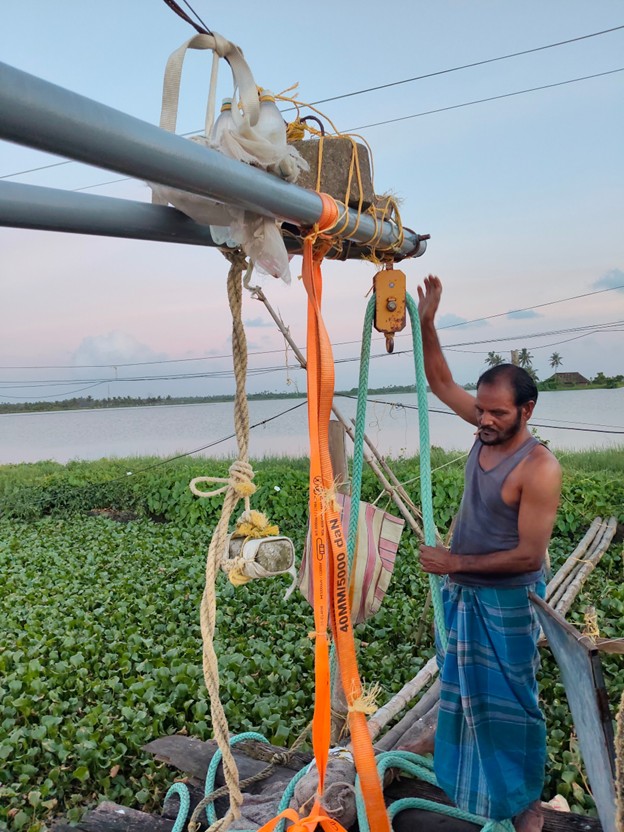
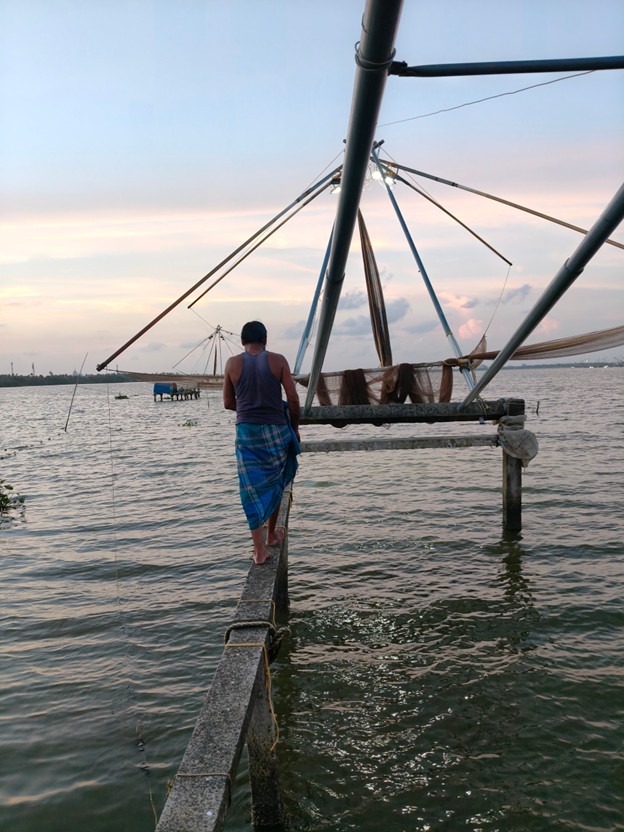
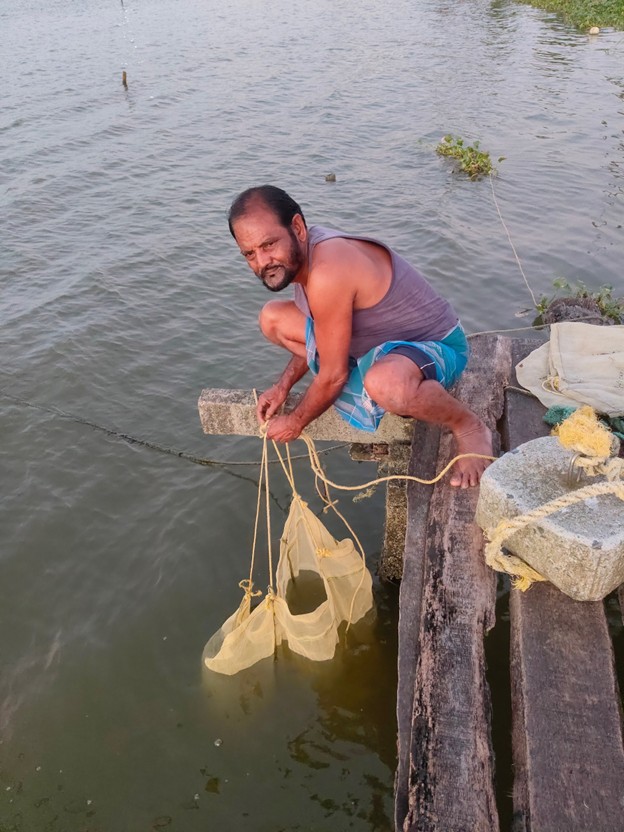
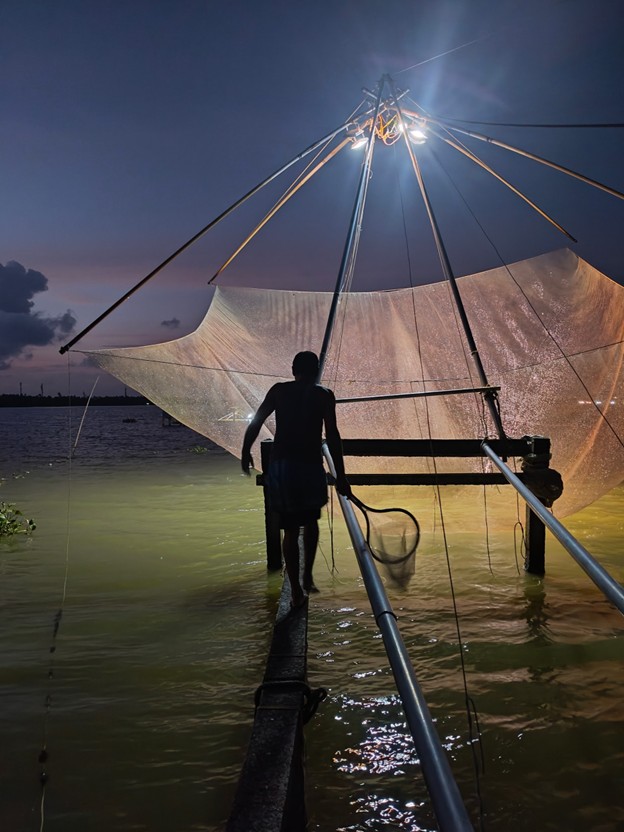
From 6:45 PM to 5 AM: The 150 Casts
From around 6:45 pm to 5 am, he lowered the Cheenavala net more than 150 times, waiting about ten minutes after each drop before pulling it up. While he was alone, he used the waiting time to call his family. Back home, he has a wife and four children, two boys and two girls. One of his sons has been working in Kumbalangi for the last five months, using a Cheenavala just a few meters away, and he called him during breaks. At 1 am, he took a 30-minute dinner break before going back to fishing. Sometimes he caught nothing; other times, he caught a better catch.
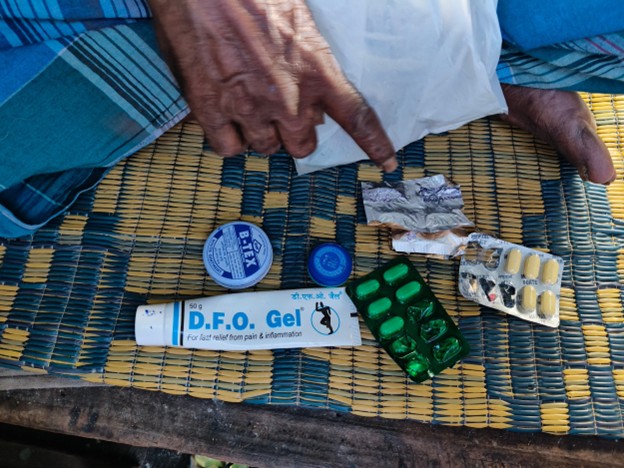
During one of the breaks, he opened a plastic bag from his bag and took out pills, pain relief cream, and cream for the itching he has felt between his fingers for years. He said he does not have serious health problems, but lifting the rope makes his body hurt. Sometimes, he goes to the public health center in Kumbalangi, where doctors give him medication. At other times, he buys medicine from the pharmacy when the pain worsens. In recent years, he has always kept these medicines with him. Since he sleeps during the day, he plans his medicine and meals to fit his schedule.
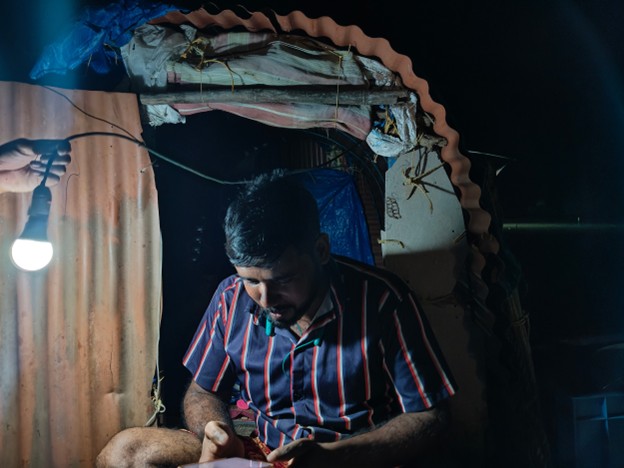
Like Kajaludheen, hundreds of in-migrant fishermen from Assam are engaged in operating the Cheenavala around Kumbalangi. Habeebulrahman, a 30-year-old from Morigaon district, Assam, has been working in Kumbalangi for the past five months. Before this, he worked as a laborer in Palakkad, Kerala, and Coimbatore, Tamil Nadu. He has prior fishing experience back home. He learned this particular technique from a friend and practiced for two days before earning on his own.
Habeebulrahman revealed that political unrest and low wages in Assam pushed him to Kerala. He appreciates the job's simplicity—he pays half the catch's price to the local net owner—and finds it the most relaxing work he has done.
Philosophy of Labor
Habeebulrahman does not have any serious health problems. Sometimes, being in cold weather gives him a cold, which he takes care of on his own. He believes that when he gets a cold, he should let his nose run and sneeze, as stopping it can make it harder to recover. He also said that people who do the hard work are less likely to develop health problems than those in higher positions.
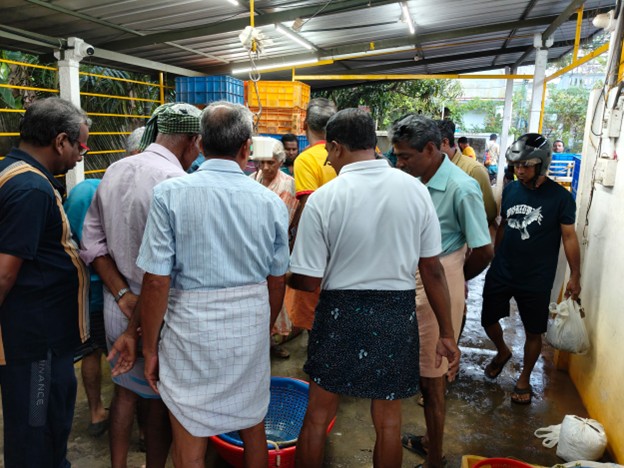
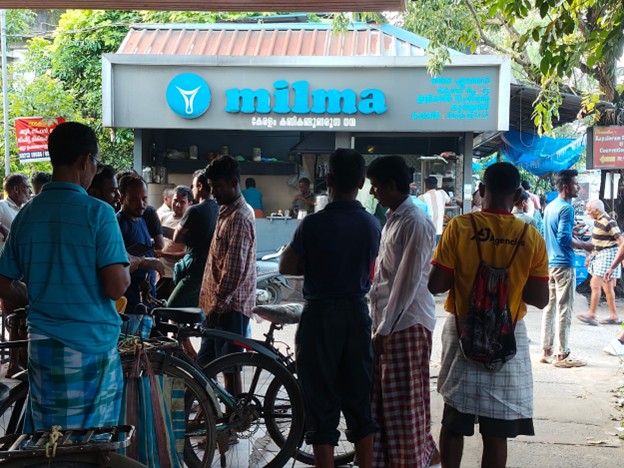
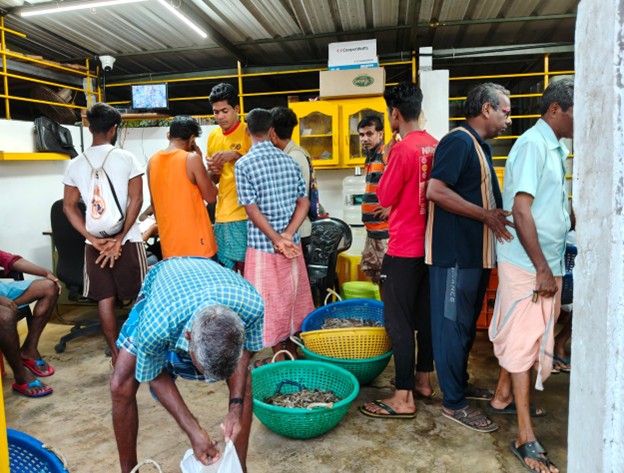
By 5 o'clock, the fish auction market opens in Illikal, the main town of Kumbalangi. The migrant fishermen bring their catch on bicycles and ride to the market. The auction center and the surrounding area become busy early in the morning as fishermen gather to sell their catch to agents. This also brings business to teashops and restaurants run by local people.
The Night's Work: 22.5 Kilograms
Kajaludheen caught 22.5 kilograms of prawns that night. After deducting the auction agent's commission, called Tharagan, he received ₹2,930. From this, he had to pay half, ₹1,465, to the owner of the fishing net, which he usually gives in the evening before going out for the next catch.
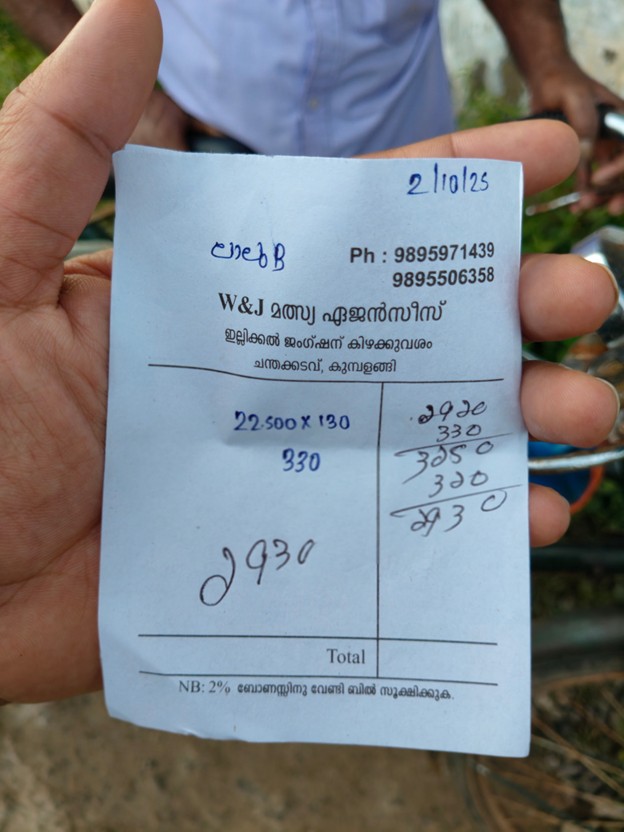
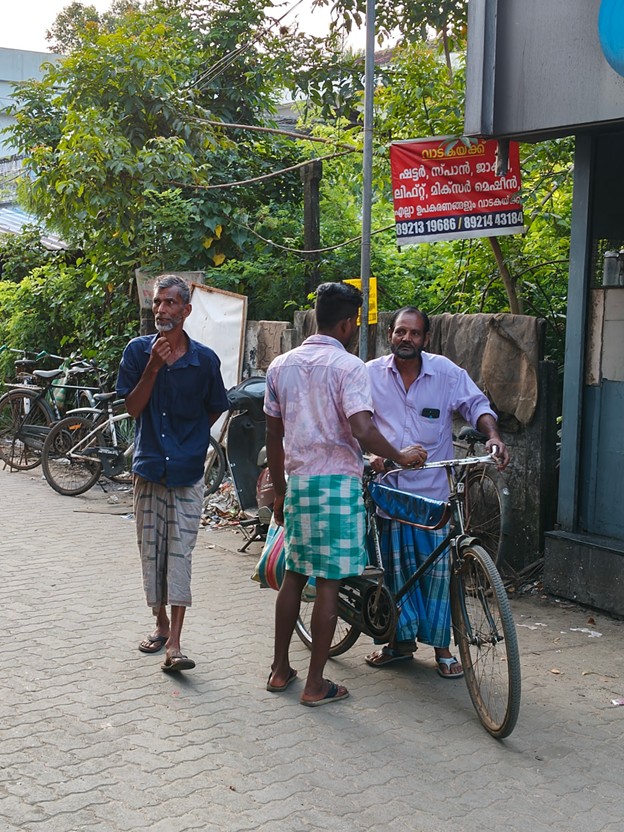
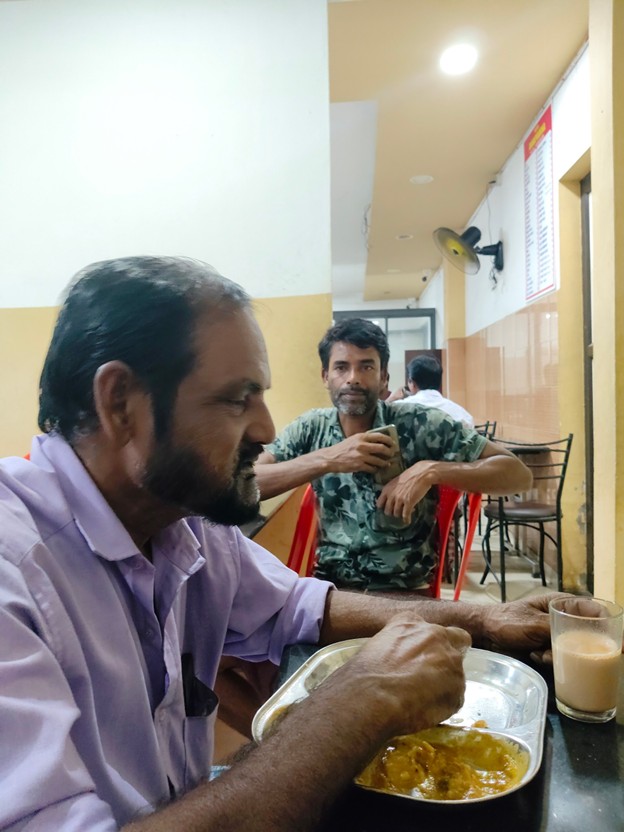
After the auction ended and he got his money, Kajaludheen spent about half an hour at the Illikal market, having breakfast with other migrants at a local restaurant. He met some friends and bought meat and other things for home. During this time, a local man approached him, spoke in Malayalam, and obtained his phone number. Even though Kajaludheen does not speak or understand Malayalam, he got the man's message: he owns a fishing net and needs workers from Assam, which Kajaludheen agreed to arrange soon. The Assamese migration network in Kumbalangi seems to be strong.
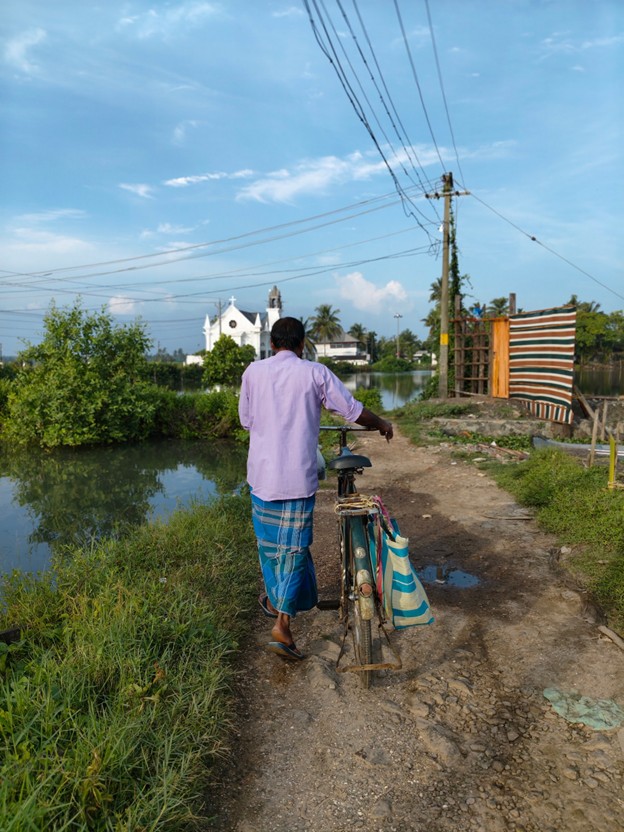
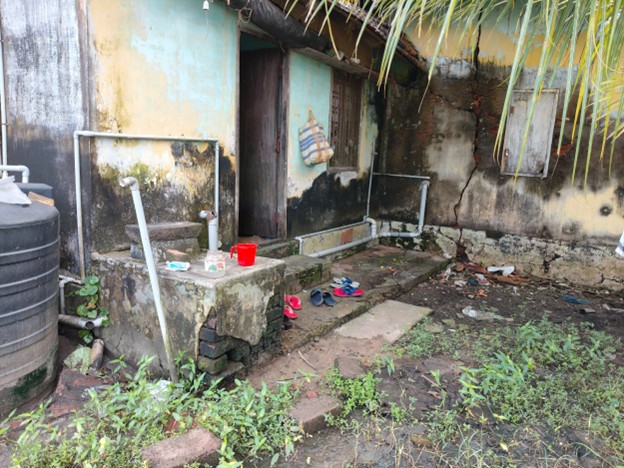
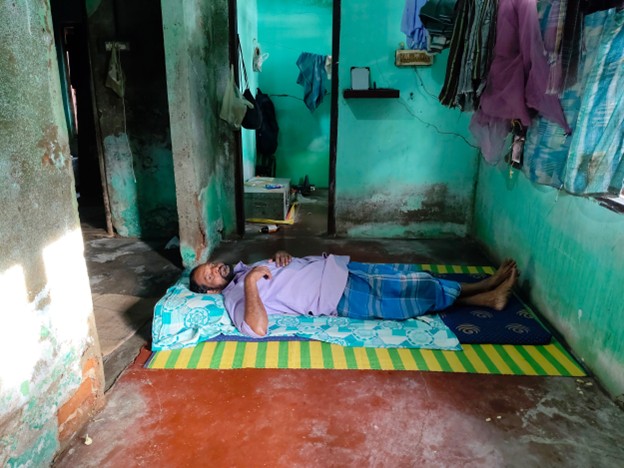
He then cycled back to his rented house on the coast of Vembanad Lake in Kumbalangi. The house has many cracks and leaks, and rainwater collects in the yard. A local family had earlier lived there but moved out after building a new concrete house. Now seven migrant workers, including Kajaludheen and his son, share the house, each paying 1,000 rupees per month as rent. When Kajaludheen arrived, the others had already returned from the auction and had started preparing food; sliced onions and pieces of tomato were laid out on the kitchen table. Kajaludheen placed the packet of meat beside them. After cooking, they all eat together by nine o'clock and then sleep for about six hours before getting ready for another night of fishing in Kumbalangi. They are not part of the daytime life in Kumbalangi; their lives begin in the evening and continue until morning.