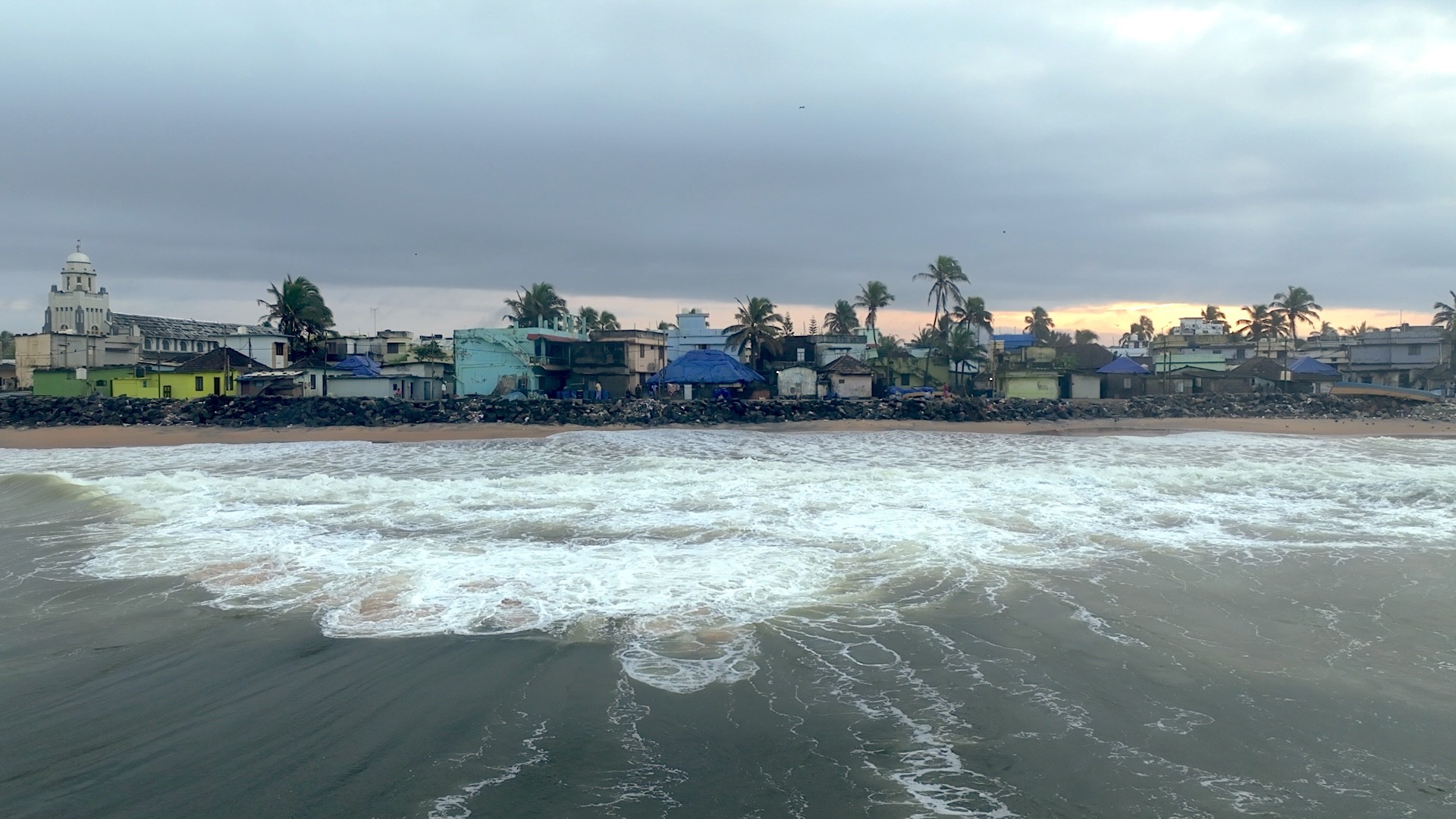
In Kerala a popular myth tells the story of its origin. It is said that Varuna, God of the oceans, impressed with the penance of the warrior sage Parashuram granted him a boon. Parashuram hurled his sword into the sea near Kanyakumari, and from the retreating waters emerged the land of Kerala. This tale echoes in my house each time Kerala's eroding shores made national headlines. My mother would say, 'What came from the sea will one day go back to the sea'. As a child I found it impossible to imagine; how could an entire state sink beneath the waves? Surely, not in my lifetime.
Thirty years on, as I travel along the southern coast of Kerala, I no longer need satellite images to trace the change. It is written plainly on the landscape. Once-celebrated beaches like Kovalam and Shankamugham have shrunk to a narrow strip. Yet paradoxically, some stretches of the coastline are expanding — advancing by tens of meters. How does one comprehend such a strange, double-edged transformation, unfolding within a single generation?
Kerala's 590km long coastline lies sandwiched between the Arabian Sea in the West and Western Ghats in the East. 41 rivers flow from the Western Ghats into the Arabian Sea via many estuaries. On dynamic shorelines such as these, coastal erosion is a seasonal process. Longshore currents flow parallel to the shore and cross-shore currents flow onshore-offshore. Together they transport sediment in both the directions, and the beaches recede and accrete naturally and seasonally. Kerala has three distinct seasons based on the rainfall it receives. During the months of the Southwest monsoons (June to September), the longshore currents that flow north to south cause heavy erosion of the land and in other seasons the updrift currents deposit sand.
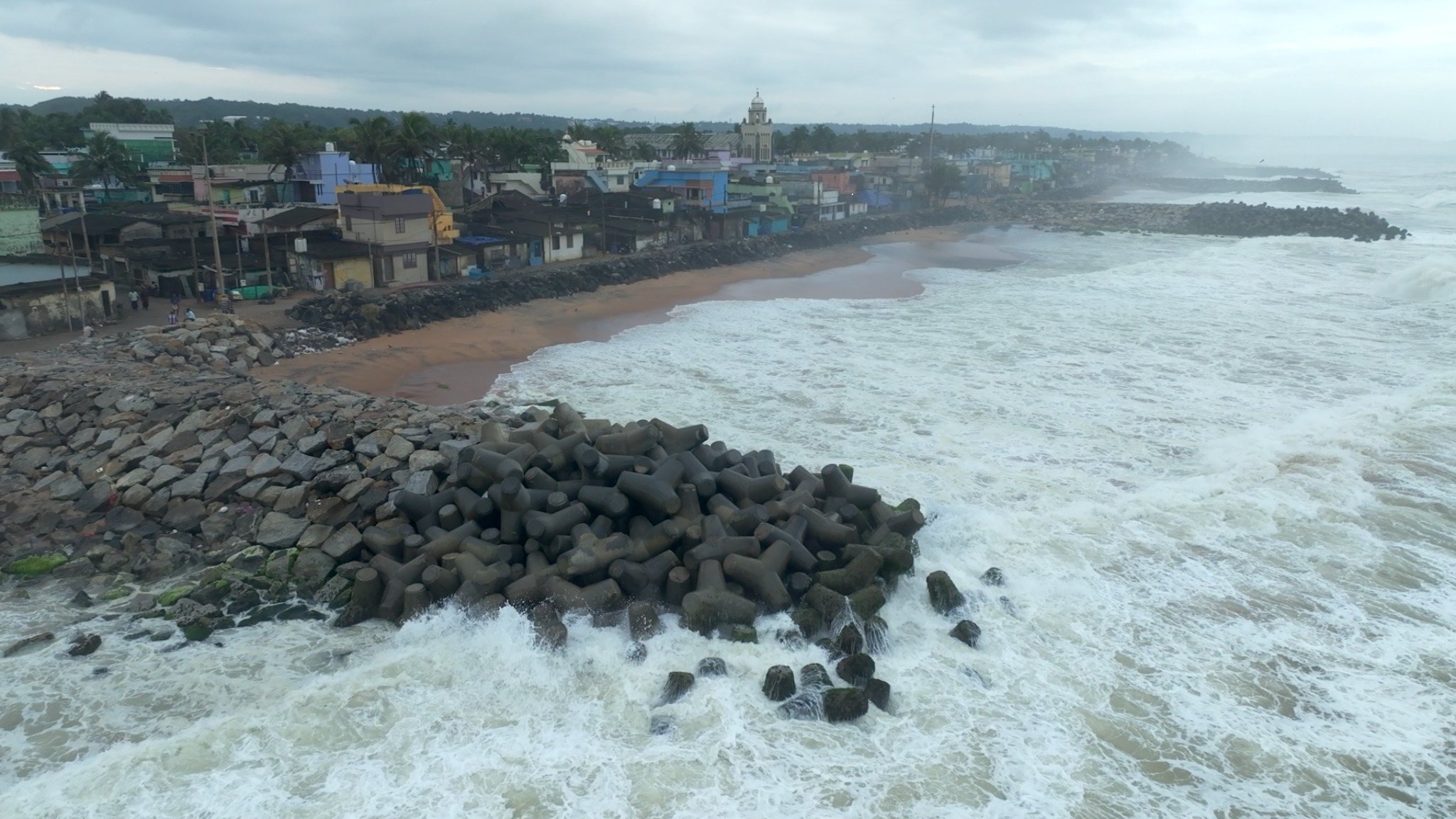
This natural rhythm of erosion and sedimentation along Kerala's coast has been disrupted by a confluence of human interventions and climate-related forces. Coastal construction is one major reason. Many fishermen speak with gratitude of the seawall, believing it has shielded their villages from erosion and cyclones. Typically built of stone and running parallel to the shore, the seawall acts as a buffer, absorbing the force of waves. Yet, while it offers short-term protection, it also curtails the natural deposition of sand — as waves crash against the rocks and retreat, they carry the sand away.
Alongside seawalls, groynes or breakwaters have become a familiar sight along Kerala's shores. Built perpendicular to the coastline, these structures are designed to trap sediments carried by the longshore drift. But their protection is uneven — while sand accumulates on the updrift side, the downdrift side is starved, resulting in accelerated erosion. The erosion is often irreversible as the sand blocked by the structures cannot return. Today, nearly 60% of Kerala's 590km coastline, is artificial, bound and coast managed by these human made defences.
The community that bears the deepest scars of land erosion and a retreating coastline are the fisherfolk. Once, their campavala boats and vast nets stretched across generous stretches of sand. Today, many of those beaches have all but vanished, and traditional ways have yielded to motorised boats — costly, fuel-hungry, and bound to go farther into uncertain waters for a decent catch.
The fishermen are also the first to feel the sting of a changing climate. As global warming drives sea levels higher across the world, the Arabian Sea too has surged forward. The tampering of river flows and the destruction of sand dunes, and coastal vegetation, especially mangroves have magnified this rise, with the waters now pressing ever closer to the land. The Indian Ocean and Arabian Sea have also warmed rapidly, triggering frequent cyclones in recent years. While heavy monsoon rains were a common occurrence in Kerala, cyclones were practically unheard of, limited as they were to the warmer Bay of Bengal. The western coast of India witnessed Cyclone Ocki in 2017 and Cyclone Tauktae in 2021 - each causing much erosion and destruction, leaving little time for the land to heal. In the village of Valiyathura, five rows of houses were destroyed by Cyclone Ocki. In fact, from Poovar in the south to Kasargod in the north, Kerala's coastline tells a single story — of precarity, debt, and an uncertain tomorrow.
The way forward calls for imagination, courage, and patience — imagination to rethink how we live with the sea, courage from law makers and politicians, and patience to let the land and waters find their balance again. What has brought Kerala to this moment has taken decades, and it may take another thirty years or more to heal. Perhaps only another boon from the God of the oceans can now save Kerala's fragile shore.